
Housing · Recovery · New Orleans
The Floor Under Us
Shelter beds, budget cuts, and the people New Orleans is asking to recover on concrete
Reporting current as of October 30, 2026.
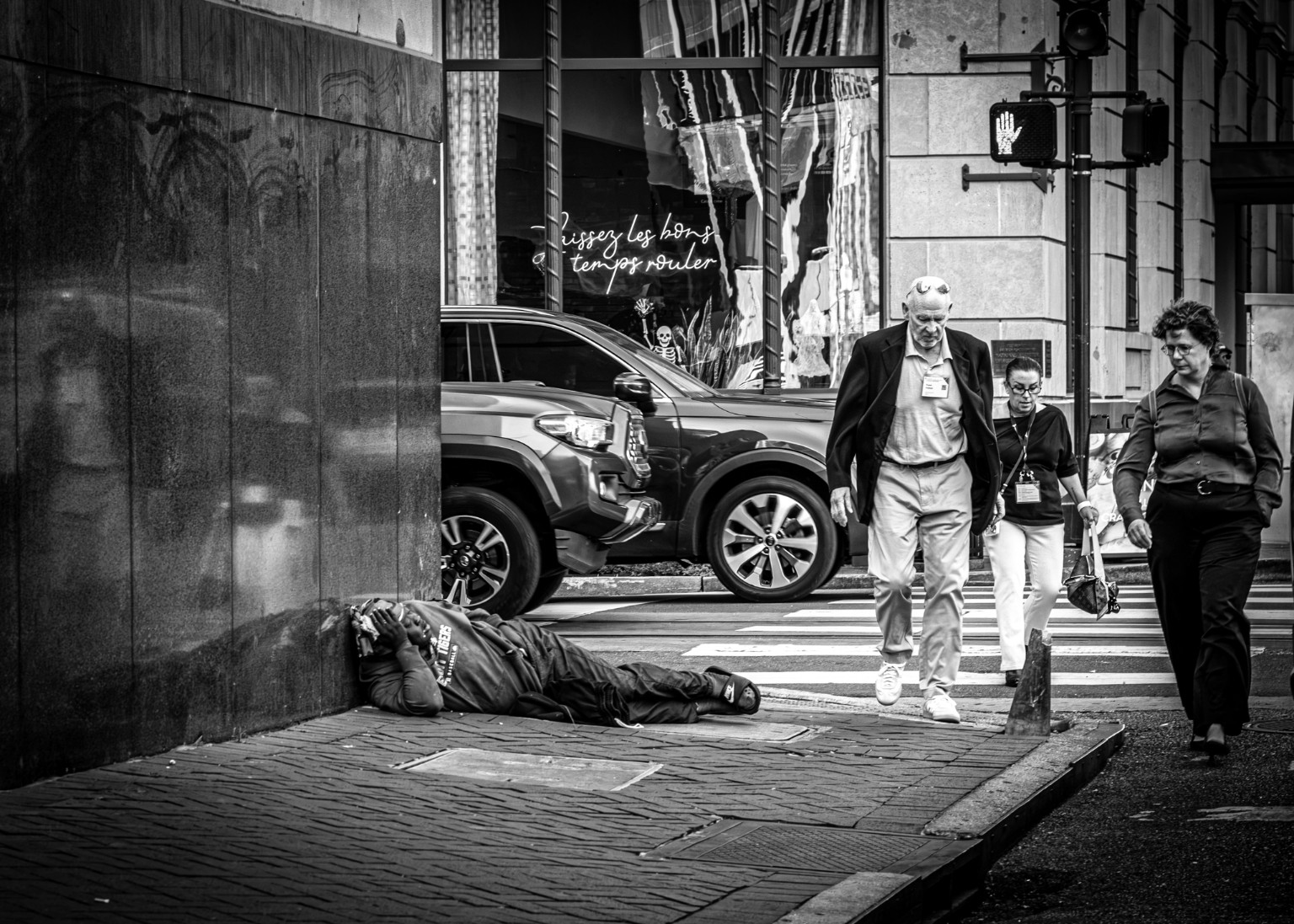
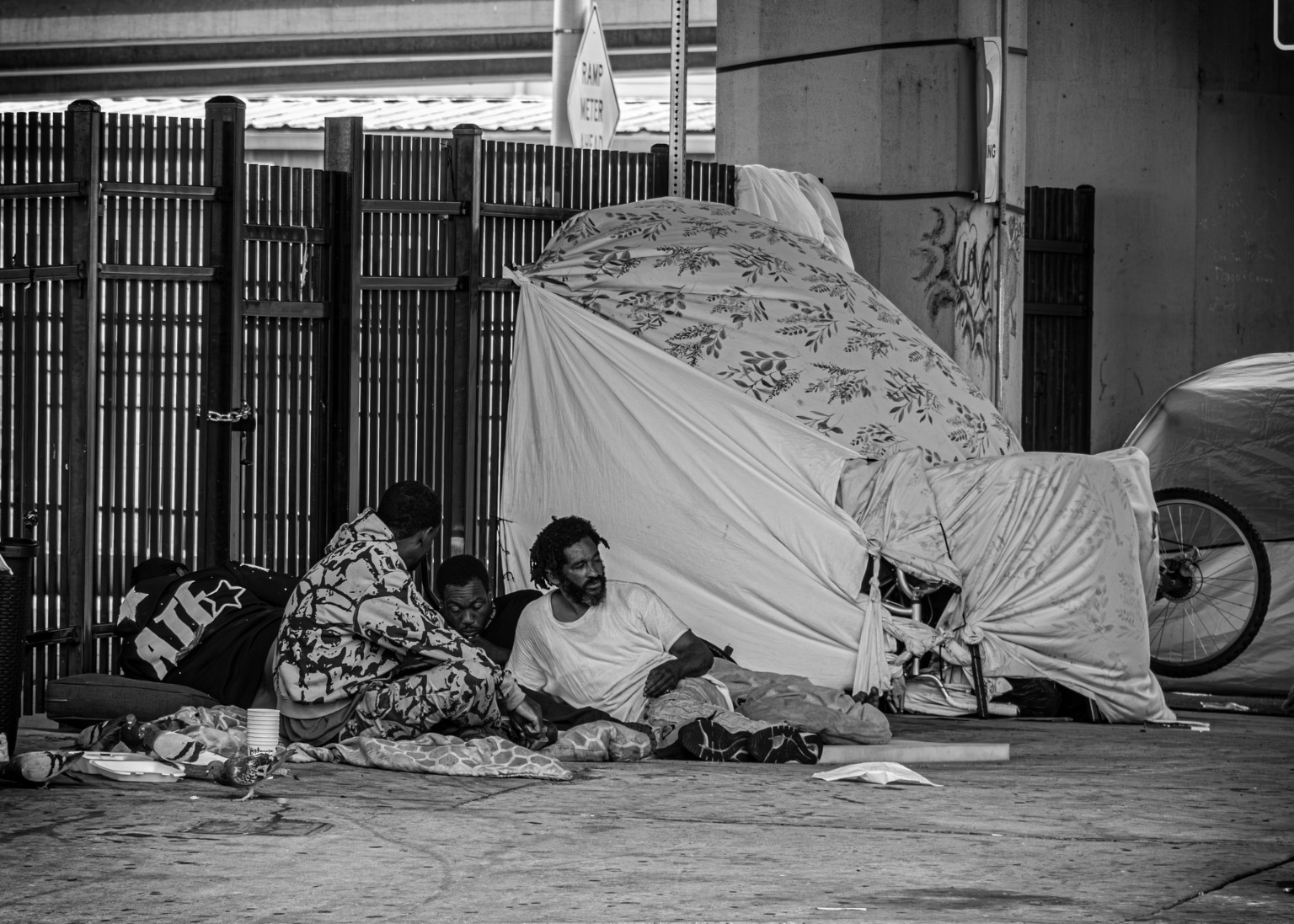
Drive into New Orleans at dawn and you’ll see people waking up in places you could never imagine laying your head for a nap, much less a whole night. Beneath overpasses, along sidewalks, and in doorways, people are trying to start their day amongst the debris, already written off by most everyone.
Some are struggling with addiction. Some are dealing with mental illness. Others have lost jobs, relationships, or the ability to afford a place to live. Their circumstances are different, but they share something most of us take for granted: the absence of a stable place to call home.
I write about addiction, recovery, and grief, and I've come to understand something that doesn't get enough attention. Recovery needs a floor beneath it.
You can't expect someone to rebuild their life while they're worried about where they'll sleep, where their children are, or whether everything they own will be gone when they wake up. You can't work steps or keep appointments from a sidewalk without facing obstacles most people never have to consider.
When that floor gives way, everything we say about second chances starts to sound shallow and empty.
And right now, for some, that floor is getting thinner.
The Numbers Behind the Tents
The most recent published count, taken in January 2025 across New Orleans and Jefferson Parish, found 1,563 people experiencing homelessness. It marked the fourth consecutive yearly increase. The 2026 numbers have not yet been released.
About 72 percent of those counted were in shelters. That figure received a temporary boost from a state-operated shelter opened ahead of the Super Bowl, which closed weeks later.
Still, the number reflects years of coordinated work by nonprofits, the City of New Orleans, and the regional Continuum of Care.
Through the Home for Good initiative, 1,537 people were connected to housing by December 2025, surpassing the program's goal of housing 1,500 people over two years. Those two numbers measure different things: 1,537 is how many people the program housed over two years, while 1,563 is how many people were counted on a single night in January 2025, so both can be true at once.
That's an accomplishment worth recognizing. It demonstrates what coordinated outreach, housing assistance, and public investment can achieve.
But those accomplishments don't eliminate the need for continued funding.
Last fall, then-Mayor LaToya Cantrell's proposed 2026 budget cut the Office of Homeless Services' general-fund budget by about 80 percent, from $3.6 million to $700,000. That cut held. In January, FOX 8 reported that the city had slashed the office's funding to $700,000 for 2026, and in February nola.com reported the office was getting just $700,000 from the city's general fund this year, down from $3.6 million in 2025.
Then, in September 2026, Mayor Helena Moreno's proposed 2027 budget would eliminate $5 million in city funding for the Low Barrier Shelter operated by Odyssey House Louisiana.
The shelter, located in a former Veterans Affairs hospital building, accommodates approximately 300 people each night.
Its operator warned that losing the funding could force it to close.
City officials have since said they want to keep the shelter open, and they are actively working on how to pay for it. Council members have asked the Downtown Development District and other partners for help. On October 22, Moreno's administration told the council that restoring the shelter is one of its top priorities for new money if the council raises property taxes through a millage "roll forward."
That vote is set for November 5. It needs five of the seven council members, and even if it passes, the council still decides how the money is spent. The 2027 budget is due December 1, and the city is also weighing a move of the shelter into a jail building on Perdido Street. As of late October, the shelter's funding had not been secured.
For the people sleeping there, uncertainty isn't an accounting problem.
It's the possibility of losing the only roof they have.
A low-barrier shelter serves people who may not qualify for or be able to navigate more restrictive programs. That can include people actively struggling with substance use, people without identification, people with pets, and people whose circumstances make traditional shelter requirements difficult to meet.
These are often the people most likely to remain outside when other doors are closed.
If the shelter closes without equivalent accommodations, those approximately 300 people will need somewhere else to go.
And New Orleans already knows what happens when people have nowhere to go.
In October 2024, ahead of Taylor Swift's concerts, state troopers relocated approximately 75 people from an encampment near Calliope and Loyola. A judge later ordered the state to provide 24-hour notice before future clearances and prohibited the destruction of people's belongings.
Moving an encampment can clear a sidewalk.
It doesn't create housing.
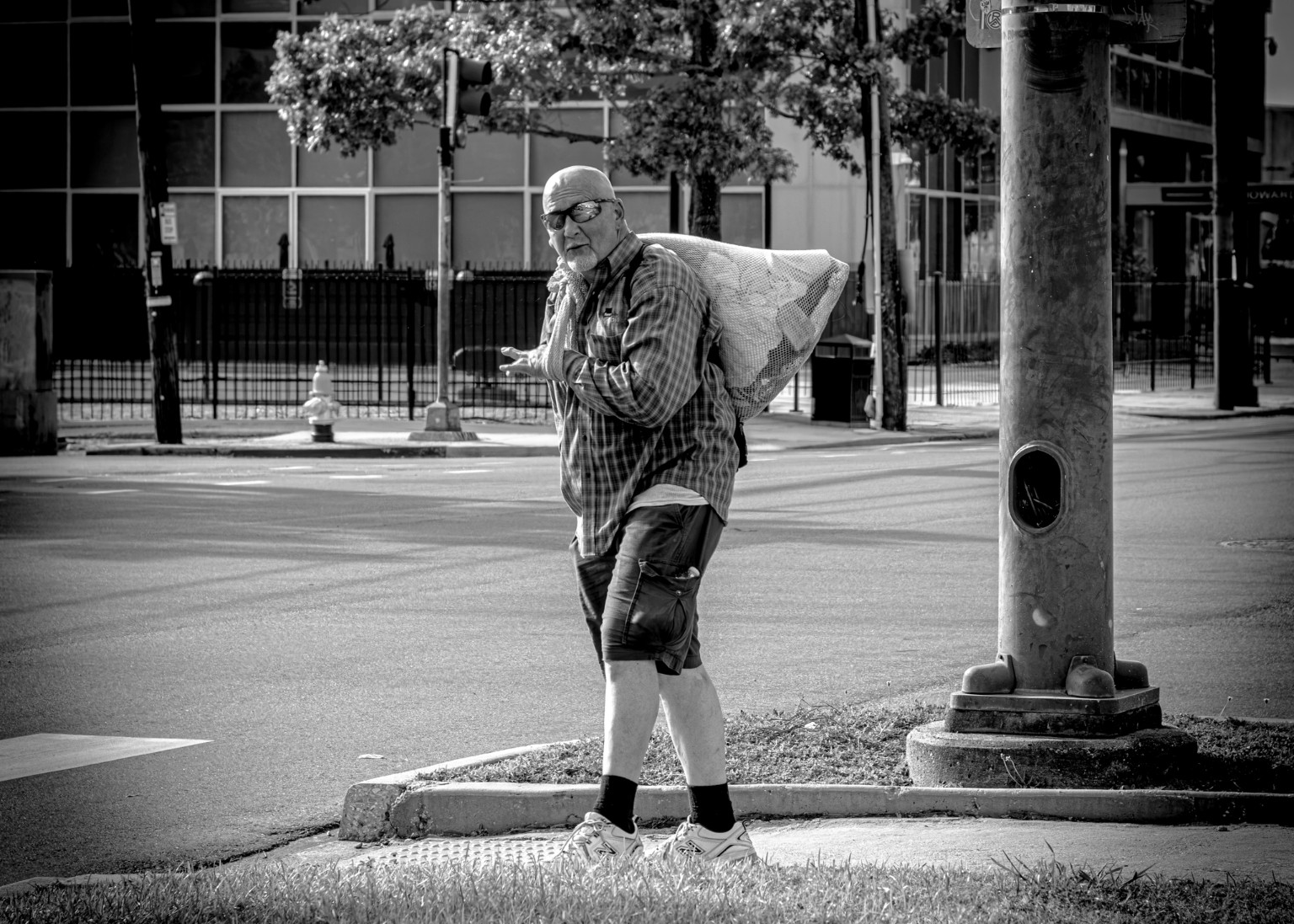
Where Recovery and Homelessness Meet
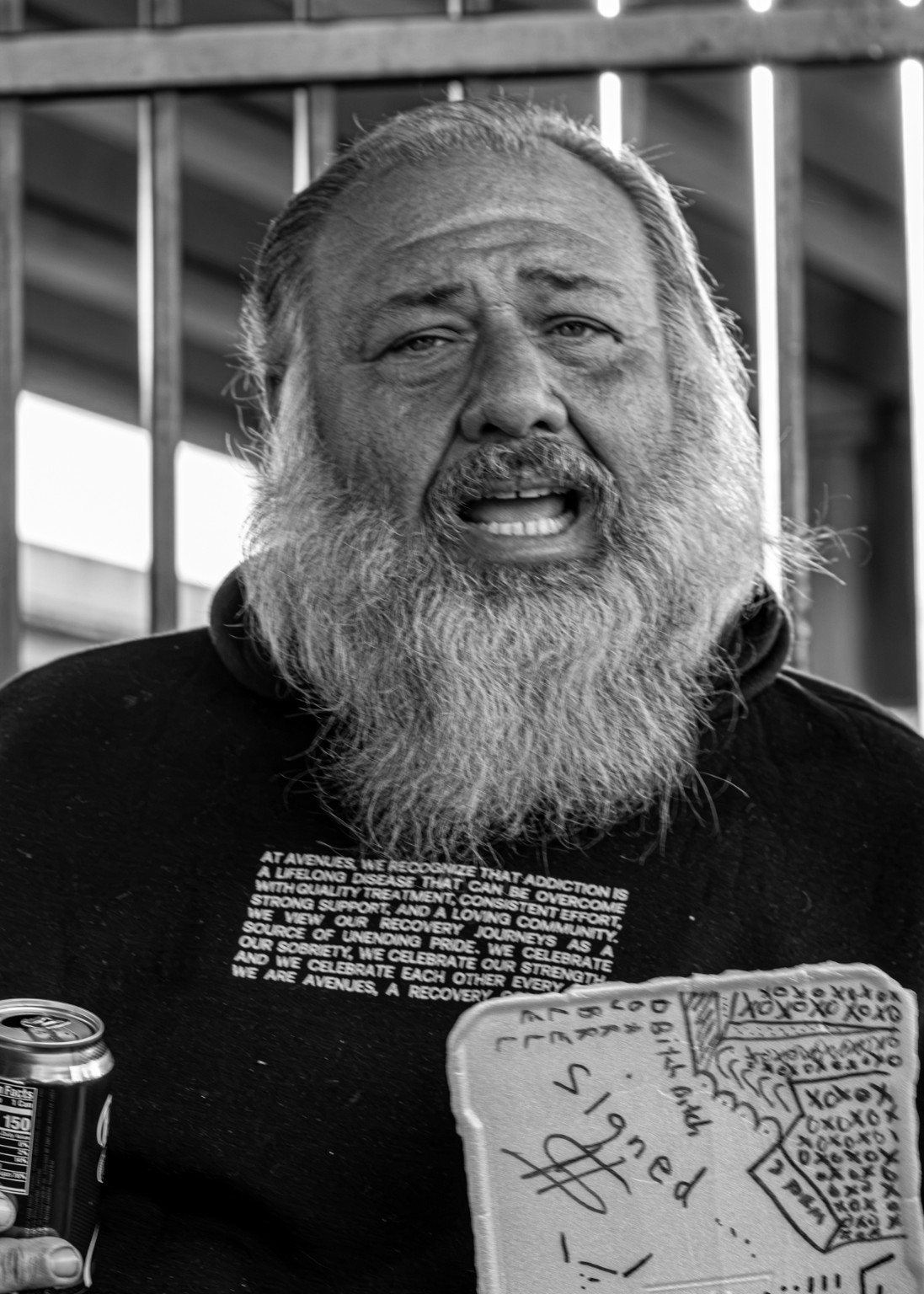
For many people in our community, addiction and homelessness are the same story told in different orders.
Sometimes substance use comes first, followed by the loss of employment, relationships, and housing. Sometimes the housing disappears first, and substance use becomes a way of coping with the realities of living outside.
And sometimes both problems feed each other until it's difficult to determine where one ends and the other begins.
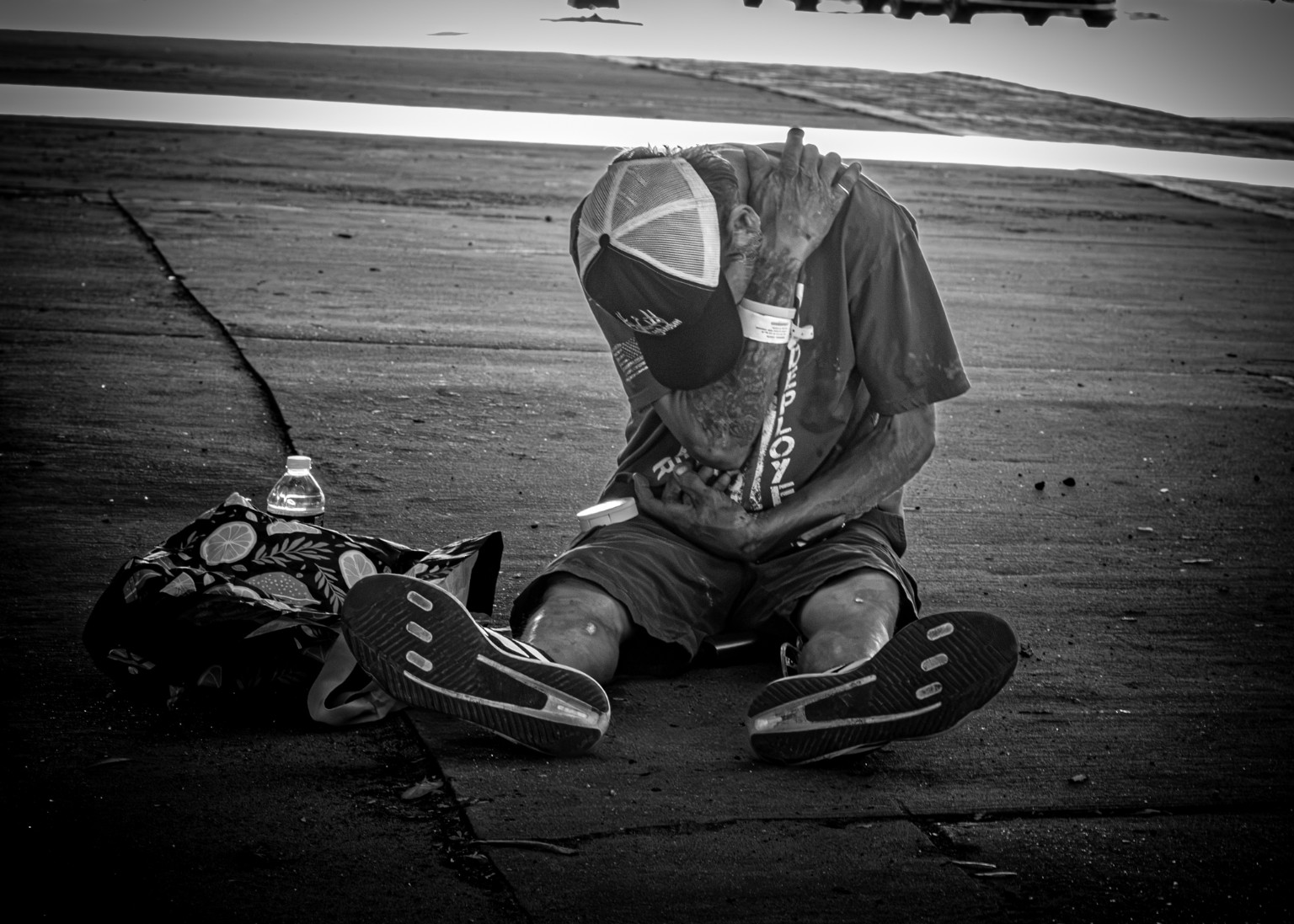
Either way, recovery becomes considerably harder without a stable place to sleep, somewhere to shower, an address to put on an application, and people who can help someone navigate the process of rebuilding their life.
I know this from the inside.
I spent six months homeless while struggling with addiction.
During that time, I lived in a car we had stopped making payments on, ducking the repo man the entire time. I slept in well-lit parking lots or outside pill houses when I could.
My wife and children stayed with her parents.
It wasn't the life I wanted for them, and it certainly wasn't the life I had imagined for myself. But keeping my family connected was something I wasn't willing to give up.
There were no shelter options available to us that would have kept our entire family together under one roof.
The options I understood would have separated us. My wife and children would have gone one way, and I would have gone another.
To some people, that might sound like a temporary inconvenience. A difficult arrangement until things got better.
To me, it was something much more serious.
I believed that separation could have destroyed my family.
I had watched too many people leave rehabilitation programs because they couldn't stop worrying about their children. They were supposed to be concentrating on getting better, but their minds were somewhere else. They worried about where their kids were, who was caring for them, and what was happening while they were away.
I understood that fear.
When you're already struggling with addiction, the possibility of losing your family can become another burden on top of everything else you're trying to survive.
I couldn't risk putting my family through that kind of separation. I believed there was a real possibility that once we were pulled apart, we would never find our way back together.
So we did what we could.
Every day, I picked up my wife and children and brought them to and from work and school. No matter where I had slept the night before, I still had somewhere to be. I still had responsibilities. There were people waiting for me, depending on me to show up.
That drive was the only thing that kept me feeling human and of any importance.
I wasn't living under a bridge. I wasn't standing on a corner with a sign. Most people who saw me probably had no idea I was homeless.
But I was.
And I was struggling with addiction at the same time.
That experience changed how I understand homelessness. It taught me that having somewhere to sleep isn't always the same thing as having a home, and that the people we pass on the street may be fighting to hold together parts of their lives we know nothing about.
Families Split at the Door
The choice I faced in that car wasn't just my family's bad luck.
The same wall has been documented by the people who run New Orleans' shelter system, and by federal researchers who followed families through shelters across the country.
A UNITY of Greater New Orleans resource directory previously published on the city's website organized many emergency shelters into separate categories for men and for women with children.
Some facilities listed restrictions on the ages of boys who could accompany their mothers. One listed an age limit of 11, another 12.
That directory is older, and some shelter locations and services have since changed. I can't say those exact rules are still in place today, and current admission policies still need to be confirmed with each shelter.
But the underlying problem has been documented by people working directly with homeless families.
In July 2023, PBS NewsHour reported that the New Orleans Women & Children's Shelter was one of the few local shelters accepting families that included men.
The shelter itself describes its services as among the limited options available for intact families and single fathers with children.
In that same reporting, then-city homeless services director Nathaniel Fields and UNITY director Martha Kegel discussed the restrictions that can make it difficult for families to remain together, including shelters that don't accept men or teenage boys.
Fields described the consequences plainly:
"We are failing families. Families are falling apart."
The problem extends beyond New Orleans.
The federal government's Family Options Study followed more than 2,000 families who entered emergency shelters in 12 communities between 2010 and 2012.
Researchers found that approximately 30 percent of those families experienced separation from at least one family member, including a partner or child.
Not every separation was caused by shelter admission rules. Families experience separation for many reasons. But researchers specifically identified programs that did not accept men or teenage boys as one contributing barrier.
The consequences could persist long after a family's initial shelter stay.
Three years later, only about one-third of families who had a child living elsewhere had reunified with that child.
Those findings deserve attention because homelessness is often discussed in terms of individual shelter beds.
A bed for a man. A bed for a woman. A bed for a child.
But a family isn't simply a collection of individuals who need separate places to sleep.
For parents trying to hold their households together, being offered shelter at the cost of separation can present an impossible choice.
I know what that choice felt like.
I chose to sleep in a car because I believed keeping my family connected gave us a better chance of surviving what we were going through.
That doesn't mean every family faces the same circumstances, or that every separation leads to permanent damage.
It means the consequences of separating families deserve to be considered alongside the number of beds available.
Because providing shelter shouldn't require a family to sacrifice the relationships they're struggling to preserve.
The Doors That Remain Open
For individuals seeking emergency shelter, organizations like Ozanam Inn continue to provide essential services.
Operating in New Orleans since 1955, Ozanam Inn now serves people at its Poydras Street location.
The organization has approximately 156 beds, including capacity for up to 59 women, and allows people to seek shelter without first going through the Coordinated Entry system.
That accessibility matters.
For someone who has spent the day trying to find food, transportation, identification, or treatment, another administrative barrier can be enough to keep them outside.
But even established shelters face limits.
Ozanam Inn staff have told WDSU that they sometimes must turn people away when the facility reaches capacity.
And when a shelter is full, the need doesn't disappear.
The person standing at the door still needs somewhere to sleep.
This is why the potential loss of hundreds of low-barrier shelter beds matters beyond any single organization.
New Orleans needs different kinds of shelter because homelessness doesn't look the same for everyone.
Someone experiencing active addiction may need a different entry point than someone who has just lost a job.
A father with three children has different needs than a single adult.
Someone dealing with severe trauma may struggle in an environment that another person finds manageable.
A functioning system has to recognize those differences rather than expecting every person to fit through the same door.
The Grief Nobody Counts
At In Vein Magazine, we spend a great deal of time talking about addiction, recovery, and the people left behind when someone doesn't survive.
Homelessness belongs in that conversation.
When someone dies from an overdose while living outside, the loss can reach far beyond the place where that person was found.
There may be a mother who has spent years hoping for a phone call. A brother who remembers who that person was before addiction. Children who will grow up with questions that may never be answered.
And sometimes there are families who have spent years trying to help but simply ran out of options.
I don't believe every overdose death could have been prevented by providing a shelter bed.
Addiction is far more complicated than that.
But I do believe we should be asking whether people had meaningful access to safety, treatment, and support before their lives ended.
Did they have somewhere to go?
Was there someone available to help?
Did the system offer a realistic path forward, or did it place another obstacle between them and the assistance they needed?
Those questions matter.
A shelter bed doesn't guarantee recovery. Neither does a treatment program, a prescription, or a second chance.
But the absence of those opportunities can make an already difficult situation even more dangerous.
And when someone dies, the grief doesn't end with the person who was lost.
It continues in the lives of the people who loved them.
Resilience Is Real, but It Isn't Free
I'm sharing my experience because it's mine to tell.
I know what it feels like to wake up without a home, to try to maintain a normal routine while your life is anything but normal, and to wonder how much longer you can keep everything together.
But I also know my experience doesn't represent everyone living without shelter.
Some people have no family to turn to. Some have been outside for years. Some are struggling with addiction, while others have never used drugs at all.
There is no single story of homelessness, just as there is no single path to recovery.
Resilience exists in the people who survive another night outside, the families struggling to remain together, the outreach workers who return to the same streets each morning, and the shelter employees doing what they can with limited resources.
But resilience shouldn't become an excuse for expecting people to survive without adequate support.
It takes shelter beds, trained staff, outreach services, treatment opportunities, and sustained funding to make meaningful progress.
New Orleans has shown that coordinated work can move people from homelessness into housing. The question now is whether the city will keep paying for that work.
Every bed we remove, every door we close, every service we push further out of reach asks people who already have very little to survive on even less.
New Orleans knows how to come back.
But coming back has always required somebody to hold the floor.
This year, that somebody is us. The question is whether we'll keep holding it.
Tracy Newby Jr. is the founder and editor-in-chief of In Vein Magazine (inveinmagazine.com), a publication of Orleans Photeaux LLC covering addiction, recovery, grief, and resilience.
Sources
1. January 2025 count (1,563; about 72% sheltered). HUD Point-in-Time report for New Orleans/Jefferson Parish (LA-503), 2025: https://files.hudexchange.info/reports/published/CoC_PopSub_CoC_LA-503-2025_LA_2025.pdf. FOX 8, Jan 28, 2026: https://www.fox8live.com/2026/01/28/advocates-hope-see-progress-they-tally-new-orleans-homeless-population/. HousingNOLA 2026 Report Card (2026 count listed as "Not released"), Sept 29, 2026: https://www.housingnola.org/wp-content/uploads/2026/09/2026-Housing-For-All-Report-Card-9-29-26-v1.2.pdf. Super Bowl shelter context: nola.com, 2025: https://www.nola.com/news/new-orleans-homeless/article_0f0a71d1-5e1b-4947-8da2-ee8eec0e76dc.html
2. Home for Good (1,537 connected to housing by December 2025). https://homeforgoodneworleans.org/ (accessed Oct 30, 2026)
3. Office of Homeless Services, $3.6M to $700K for 2026. FOX 8, Jan 15, 2026: https://www.fox8live.com/2026/01/16/new-orleans-homeless-shelters-worry-about-funding-cuts/. nola.com, Feb 10, 2026: https://www.nola.com/news/politics/nate-fields-fired-moreno-homeless-services/article_0110cb5a-2206-4ec9-b8a4-6da43b8541c7.html. Original proposal: nola.com, Nov 5, 2025: https://www.nola.com/news/politics/new-orleans-homelessness-encampments/article_3aa1b27b-121b-4dde-9066-2dfab22eeb78.html
4. Low Barrier Shelter: proposed $5M cut and closure warning. Verite News, Sept 23, 2026: https://veritenews.org/2026/09/23/low-barrier-homeless-shelter-budget-cuts/. About 300 people: Axios New Orleans, Oct 21, 2026: https://www.axios.com/local/new-orleans/2026/10/21/sanitation-cuts-waymo-rules-homeless-shelter-cuts
5. Commitment to keep the shelter open, partner talks, possible jail-site move. nola.com, Oct 7, 2026: https://www.nola.com/news/politics/new-orleans-homeless-shelter-funding/article_41fb7356-e7a4-40f8-9060-6c7730a55f43.html
6. Moreno's Oct 22 millage priorities and the Nov 5 vote. nola.com, Oct 22, 2026: https://www.nola.com/news/politics/moreno-millages-priorities-low-barrier-shelter/article_c2b67581-5459-4637-8976-28db087c0d38.html. Verite News, Oct 27, 2026: https://veritenews.org/2026/10/27/new-orleans-city-council-millage-tax/
7. Calliope and Loyola, October 2024. nola.com, Oct 23, 2024: https://www.nola.com/news/taylor-swift-new-orleans-tour-homeless-encampment/article_e79c6a52-9150-11ef-9d3e-132592056da6.html. Court order: Verite News, Dec 4, 2024: https://veritenews.org/2024/12/04/jeff-landry-homeless-encampment-sweeps-effects/
8. PBS NewsHour on family separation in New Orleans. "'We're barely making it.' Why more New Orleans families are without stable housing," Jul 14, 2023: https://www.pbs.org/newshour/nation/were-barely-making-it-why-more-new-orleans-families-are-without-stable-housing
9. New Orleans Women & Children's Shelter. https://nowcs.org/about/
10. UNITY of Greater New Orleans resource directory (older, undated). https://nola.gov/nola/media/Homeless-Services-and-Strategy/UnityDirectory_web.pdf
11. Family Options Study. U.S. HHS/ACF OPRE brief, "Child and Partner Transitions among Families Experiencing Homelessness," 2017: https://acf.gov/sites/default/files/documents/opre/child_partner_separation_brief_06_29_2017_b508_2.pdf. Three-year reunification findings: https://pmc.ncbi.nlm.nih.gov/articles/PMC6168747/
12. Ozanam Inn. Beds and history: https://www.ozanaminn.org/about.html. Intake without Coordinated Entry: https://www.lhc.la.gov/housing-and-services-outside-balance-of-state-regioni/ozanam-inn. Turning people away at capacity: WDSU: https://www.wdsu.com/article/new-orleanss-unhoused-population/71787060